
Overview
Introduction
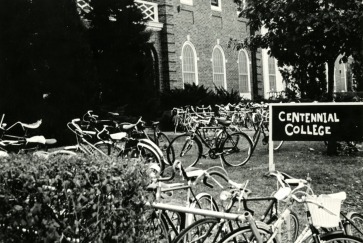
The 1960’s were a time of vast and unique new social and political movements across the entirety of the United States. It was a time of civil rights revolution, culminating in the Civil Rights Act of 1964 and the assassination of Martin Luther King, Jr. in 1968, which breathed a new life into his cause. It was also a time of anti-war protests against the Vietnam War, which raged on between 1955 until 1975, and the Bay of Pigs Invasion in 1961, in particular. However, during this time there was also significant expansion of understanding in the way we think about education and learning.
One result of this was the creation of the Centennial Education Program (often referred to as simply the “Centennial College”) by the University of Nebraska – Lincoln in the year 1969. This was a cluster college which incorporated a new strategy of teaching that was based around both the integration of living and studies, and a curriculum designed by students based off interests they expressed.
This web site is intended to document aspects about the origins of the University of Nebraska – Lincoln’s Centennial Education Program between the years of 1969 and 1972.
The Centennial College was loosely based on the format of a “cluster college.” A cluster college can be described as a smaller college that operates within a university’s parameters and is associated with the university, but also retains a certain degree of autonomy and tends to specialize in one or few specific fields of study. A cluster college usually has its own curriculum and affiliated courses, but students are encouraged to supplement their curriculum with classes from the larger university, and this is often a necessity.
Cluster colleges often have their own facilities and/or dormitories, as is the case in the Centennial College. Additionally, these spaces may be utilized for multiple purposes. The Centennial College is a prime example of this due to its use of one hall as dormitories, integrated classrooms, and galleries to display student work.