Athletics
Item
-
Title
-
Athletics
-
Date
-
1900s
-
Description
-
In the Yearbooks
-
Transcription
-
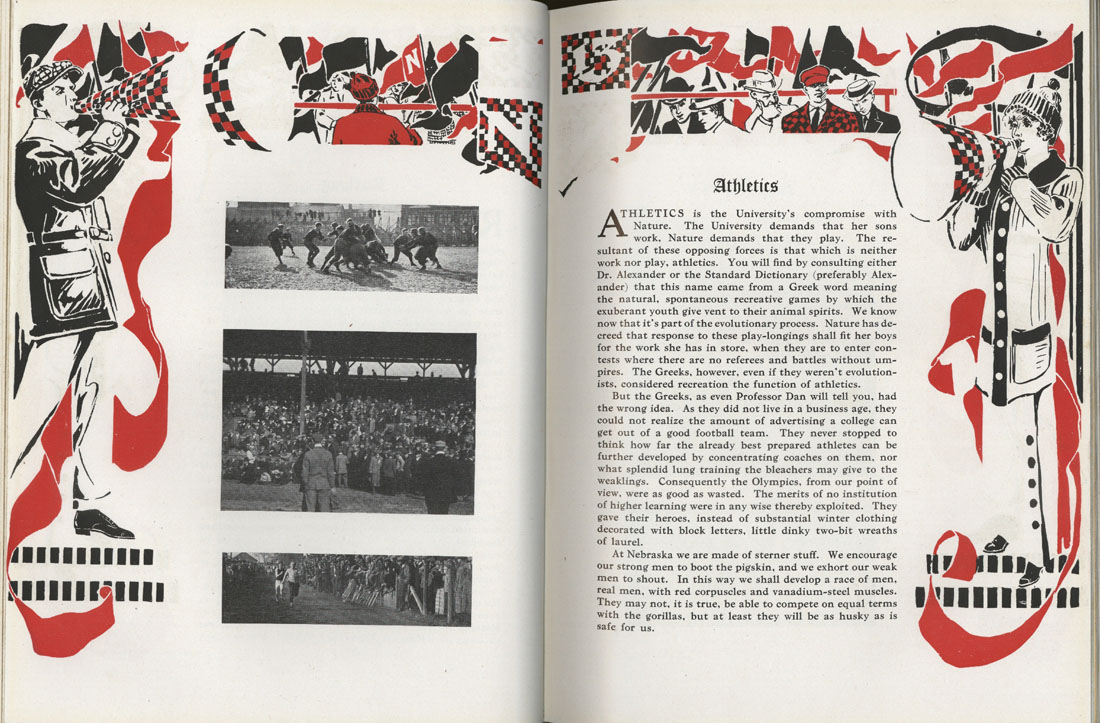
"ATHLETICS is the University's compromise with Nature. The University demands that her sons work, Nature demands that they play. The resultant of these opposing forces is that which is neither work nor play, athletics. You will find by consulting either Dr. Alexander or the Standard Dictionary (preferably Alexander) that this name came from a Greek word meaning the natural, spontaneous recreative games by which the exuberant youth give vent to their animal spirits. We know now that it's part of the evolutionary process. Nature has decreed that response to these play-longings shall fit her boys for the work she has in store, when they are to enter contests where there are no referees and battles without umpires. The Greeks, however, even if they weren't evolutionists, considered recreation the function of athletics.
But the Greeks, as even Professor Dan will tell you, had the wrong idea. As they did not live in a business age, they could not realize the amount of advertising a college can get out of a good football team. They never stopped to think how far the already best prepared athletes can be further developed by concentrating coaches on them, nor what splendid lung training the bleachers may give to the weaklings. Consequently the Olympics, from our point of view, were as good as wasted. The merits of no institution of higher learning were in any wise thereby exploited. They gave their heroes, instead of substantial winter clothing decorated with block letters, little dinky tow-bit wreaths.
At Nebraska we are made of sterner stuff. We encourage our strong men to boot the pigskin, and we exhort our weak men to shout. In this way we shall develop a race of men, real men, with red corpuscles and vanadium-steel muscles. They may not, it is true, be able to compete on equal terms with the gorillas, but at least they will be as husky as is safe for us."
-
Rights
-
To inquire about usage, please contact Archives & Special Collections, University of Nebraska-Lincoln Libraries. These images are for educational use only. Not all images are available for publication.

 Athletics