
The Founding Years
The founding years of the University were chaotic with criticism from community and dealing with the government in attempt to solidify the placement of Nebraska’s first college in the city of Lincoln. The Morrill Land Act offered land to whatever city was qualified to build a successful educational institution, and both Lincoln and Omaha wanted the land.
Overview
The founding years of the University were chaotic with criticism from community and dealing with the government in attempt to solidify the placement of Nebraska’s first college in the city of Lincoln. The Morrill Land Act offered land to whatever city was qualified to build a successful educational institution, and both Lincoln and Omaha wanted the land.
Morrill Act
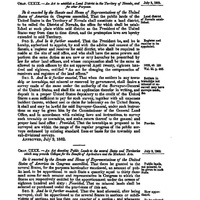
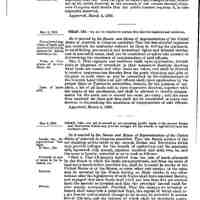
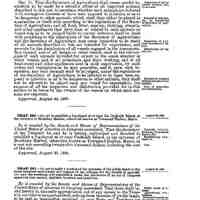
The Morrill Land Act as passed by congress intended to act as an incentive for states to build colleges. They realized that education was the way of the future, and the only way that the U.S. would progress in the future. The land grant has been refered to as "America's greatest contribution to higher education". The Land Act's intent was to make higher education available to qualified individuals at a low cost, thus preparing them for productive careers.
Many think that the Morrill Act said that a strictly Agricultural college was to be built with the money. That is definitely what the government wanted, and this was implied in the text of the Act but it never stated that explicitly. Therefore the University didn’t break any laws when they developed a school that was not solely based around agriculture. Many States, especially in the Midwest built agricultural colleges but chose to keep the state college separate. This is why we see names like Iowa State. Nebraska, however, took the money and built one college: The University of Nebraska, Lincoln.
Building a University
Controversy over University Hall started before even the first bricks were layed, when the regents contracted wtih R.D. Silver for $128,000, well over the hundered thousand dollar limit they were given. The regents were so eager to get the building started that the contract was made before the building plans were even finalized. The building had problems from begining to end. The bricks were too soft, the roof leaked, and stoves had to be placed in classrooms because the furnace could not heat them. When the building was finished, three professional architects surveyed the building and deemed it "safe for the present and probably for years to come", but problems persisted, and so did criticism from the community. In the end, almost every part of the building had to be repared but it did give the University fifty years of service.
As you can imagine, this brought plenty of criticism, especially from Omaha who was still bitter about not being the capital city or being chosen to host the University. The Omaha papers constantly bashed the University for every little thing that went wrong and this building was a prime target.
Founding Technicalities
The Morill Act, though it wasn't explicitly stated, was passed to create more agricultural colleges. The University of Nebraska at Lincoln, however, was created as both an agricultural and a technical school. This was not out of legal range, and in fact likely saved the university from unnecessary financial troubles.
Two years after accepting the Morill Act, an amendment was created to ensure the proper delegation of monies. The legislature distinguished clearly between the regents' fund and the university fund, how two-thirds of land sale profits would benefit the university fund while the other third was to supplement the regents' fund. (Wheeler)