
Nu History
Item set
- Title
- Nu History
Items
-
-
 *
* -
 *
* -
 *
* -
 *
* -
 ACADEME What cities men have dreamed! And builded of hewn stone on plain and hill Till man's historic script is starred and seamed With images of grandeur that do fill Dim generations with reverberant awe Of kings and peoples and their cities law! Great Karnak which Tehutmes raised Of granite of Syene and red porphyry And Nubian gold—and o'er it blazed Tehutmes' name, the Conqueror! Babel of the East—rich Babel that did lie By the rivers of Paradise, Lord of peace and war... In her Orient mart The fairskinned northman met the swart And jewelled daughter of the south— Ah, honey was her mouth, And honeyed song was all her breath! And honeyed was the tomb Wherein the siren city laid her sons at death... Karnak and Babel, and she who gave their doom To earth's wide nations—Rome, the eternal! Who should withstay her all-imperious march... Today, the broken pillar and the ruined arch Proclaim her vanished sway. But we shall build more lastingly than they! For we shall seat in templed majesty, Fronting with gate serene the dawning day, What city deep-eyed Plato saw In visionry supernal— Justice her corner and all her law That wisdom which must be The guide and crown of mortal destiny. H.B.A.
 -
 his own words spoken upon the occasion of the death of a long-time friend who was dear to him. "At the table of life we sit with our friends, enjoying their presence, their conversation, their counsel; and it seems to us that this pleasant company must continue indefinitely. And then—one goes into another room, and does not return. His vacant chair reminds us of his absence, and we stare in sorrow at the place where so recently he sat among us. So has gone from us our long-time friend, and so we sit in sorrow that we shall see him no more among us. When we gather again in the places where we were wont to see him we shall miss his genial countenance whose very presence was a benediction. To that other room to which he is gone we ourselves shall go, and there will be gathered again the company of congenial spirits that learned to love each other here. He has gone before and left us here a while, but we shall follow him very soon and find him there awaiting us." No better words or phrases than these could be chosen to describe the deep, burning sadness in the hearts of Dr. Bessey's admirers as he was laid away. The words reveal, in their very simplicity, much of the life and philosophy of our steadfast friend, of our inspiring teacher, of our fatherly associate. Dr. Bessey's last illness covered a period of four weeks, beginning during the last week of January and culminating in his death on the evening of February 25, 1915. Yes, he is gone, but to have met him was to honor him; to have been taught by him was a priceless privilege; to have been intimately associated with him was a benediction; to have walked with him into the fields and woods and to have received from him a glorious view of the realm of which he was master was to have been led very close to the great throbbing heart whose pulsations will never cease in the breasts of those who sat at his feet until they too shall have passed into that "other room." RAYMOND J. POOL.
 -
 betterment of mankind. He was never too busy to drop his work instantly for a hearty greeting which often lengthened to a real visit with his "boys" when they chanced to return to Lincoln for a few hours. He was an inspiring adviser to the student. Many times the homesick or discouraged student left his office rejoicing, with fresh courage and real inspiration for his work. This was true not only of the botanically inclined but also for others whose primary inclination had drawn them into other fields. As a teacher Professor Bessey had no superiors. His methods in the class room and laboratory were so full of boyish enthusiasm, he was so companionable, that the students were simply "infected" with the matter with which he dealt. It was the personality of the man which made his teaching such a strong factor in student life for nearly a half century. The quaint paternal cordiality, so marked during the last decade of his life, won the admiration of many students who really cared little for botany but who took his courses merely to come to know the man, or because their father or mother had had work with him and they wanted their sons and daughters to come under the same benign influence regardless of what they might learn of the wonders and beauties of plant life. The stimulating methods of the man and the esprit de corps that were always conspicuous about his department were reflected in a particularly interesting and important form in the institution of the Botanical Seminar by a few of his advanced students in 1886. The "Sem. Bot." soon became and has always been one of the most enthusiastic and useful departmental clubs in the land. The organization was largely apart from his supervision but yet his was guiding spirit from which the members drew their enthusiasm whether that factor led them out on a dark night to attack the "Lits and Philistines" or sent them into a remote section of the state in search of some new element of the flora. Doctor Bessey was deeply religious, as all understand who knew him best. This fact is beautifully portrayed in
 -
 and to leave undone and unsaid the unpleasant. This was feature of Bessey's general life and in thus living he performed a service the extent of which is probably not appreciated by those unfamiliar with its magnitude and significance. But Bessey was best known to Nebraskans and to those in the University as "Professor" Bessey, the vigorous enthusiastic and devoted exponent of the cause of education and the fatherly friend of the student. Except for a few hundred dried specimens, many of which indeed were poorly prepared and even incorrectly named, there was no botanical equipment in the University when he entered upon his second and last professorship in this institution. Truly, Professor Bessey was all that there was of the department of botany in the University of Nebraska in 1884. But it was not long until there were students, laboratories, library, microscopes, herbarium and other equipment abundance. As a result of his labors and the stimulus of his teaching the herbarium has grown until now there are more than 35,000 specimens in the herbarium of the Botanical Survey of Nebraska and the general collection contains more than 300,000 additional specimens which represent nearly all of the floras of the world. The botanical library has grown from nothing in the beginning to a very useful collection containing several thousand botanical books, thousands of pamphlets, and nearly all of the leading botanical periodicals of home and foreign publication in complete files. The laboratories have grown from a room or two in University Hall or in the Old Chemical Laboratory and later to several rooms in Nebraska Hall. His department was always crowded and it is especially sad that he did not live to enjoy more commodious quarters in the new building which bears his name. Bessey's students were numbered by the thousands. One of his keenest delights was to page over the lists of former students of his department and to picture their lives and their labors, often in distant lands, all contributing of their thought and effort to the advancement of science and the
 -
 Professor Bessey always took a great interest in the development and progress of the agricultural colleges and experiment stations. During the early eighties he had considerable to do in connection with the plans of the federal Department of Agriculture looking toward the establishment of state agricultural experiment stations supported in a measure by federal aid. He finally defined the duties of such experiment stations in a paragraph which was later adopted verbatim as a part of the law known as the Hatch Act. It is also of local interest that he wrote the first and second annual reports of the Nebraska Agricultural Experiment Station in 1888 and 1889. At about that same time there was considerable agitation in the state to sell the Experimental Farm or "State Farm," but Dr. Bessey threw the full weight of his influence against that movement and after a vigorous campaign the agitation ceased and the movement was defeated. Professor Bessey was the author of many technical and semi-popular books and papers. Besides his books and numerous technical papers he wrote much for the agricultural press and for the more or less popular audience. For considerable periods of time he was associated editorially with a number of botanical and other scientific journals. In this capacity he was often called upon to review the published work of others. He held very decided opinions as to what constitutes a review of a scientific book or paper. He felt that what the botanical world wanted was a glimpse of what such a book or paper contained rather than criticism of the bad points which h might have indicated. He very seldom wrote an adverse note. Enthusiastic in his praise of good work he was occasionally somewhat harsh in the condemnation of obviously worthless or grossly misleading material. Even this infrequent tendency was not altogether unpleasant for the victim, however, because everyone knew the kindly spirit which Professor Bessey issued even his criticisms. He always sought to temper criticism wherever possible and he seldom spoke or wrote an unkind word. He tried to do the good and the pleasant
 -
 profitable association with these and all of the other agricultural organizations of the state. His interest in tree planting and his relation to that work in the state and the nation attracted wide attention home and abroad. The remarkable work that the United States Forest Service has done and is now doing in the Nebraska sandhills is but one of the many important undertakings which were directly inspired by Dr. Bessey's enthusiasm and far-sightedness. During the later years of his life Dr. Bessey was particularly delighted to observe the rapid progress that his adopted state was making along the various branches of agricultural endeavor. This was interpreted in a modest way as a result, in part at least, of the labors he bestowed in that direction in his earlier years in Nebraska. No more fitting tribute could have been rendered, nor one more gratifying to him, than was done in January, 1913, when hundreds of people representing all of the agricultural and many other activities of the state gathered in his honor and when numerous speakers helped to recall the incidents of his long period of service which was then in its twenty-ninth year. The state of Nebraska loved Professor Bessey and he reciprocated that affection to the fullest, but that was merely one of the many directions toward which an overflowing measure of devotion and enthusiasm carried him. His broad-mindedness and the many-sidedness of his personality made him a valuable citizen of the state because his intellectual horizon was broad enough to include the great and the small affairs of the state and the nation and to stimulate the highest scientific achievement as well. That his sterling qualities were esteemed by his associates was strikingly illustrated by the great number of important offices to which he was elected, both at home and abroad. The highest scientific honor of this kind which came to him was probably the presidency of the American Association for the Advancement of Science. His name occurs in the list of presidents of that famous organization along with such names as Agassiz, Gray, Dana, Torrey, Le Conte, Mendenhall, Newcombe, Remsen, and Jordan.
 -
 *
* -
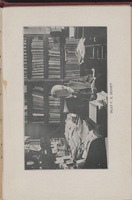 DEAN C. E. BESSEY
 -
 CHARLES EDWIN BESSEY PROFESSOR OF BOTANY AND DEAN OF THE INDUSTRIAL COLLEGE 1884-1915. Professor Bessey was notified in June, 1884, that he had been elected professor of botany in the University of Nebraska. He was then at Ames College, Iowa. The selection had been made by the regents of the University without his knowledge, but he was sufficiently interested in the incident to come to Lincoln "to look the place over." During that first visit to the University he found that nothing had been done along botanical lines and he was quite naturally reluctant to have the accumulation of his fifteen years' labor at Ames to go to a new state to build up a new department from the very beginning. So he told the regents that they were not ready for him and declined the offer of the professorship. A second offer, extended in August of the same year, included the deanship of the industrial faculty or college as well as the professorship of botany. After another trip to Lincoln and a consultation with the board of regents Professor Bessey accepted the second call and his inaugural address was delivered at the University in September, 1884. He began his active class work at the University in January, 1885. His first thought was always with the work of his classes in lecture room and laboratory and except for a few brief interruptions he continued that work to the beginning of his final illness. Much of Dr. Bessey's energy was devoted during the earlier years of his work in Nebraska to the collection of the grasses and other economic plants of the state. He made many talks on grasses, weeds, plant diseases, the methods of improving plants and the possibilities of a better agriculture. He soon became acquainted with Governor Furnas and with him organized the first series of Farmers' Institutes which were thereafter periodically enlivened by his presence. His first address to the Farmers' Alliance was in December, 1884, and to the State Historical Society in January, 1885. Then followed years of pleasant and
 -
 his, the taking, mine. Thus I learned to value his simple tastes, his unostentatious dignity, the catholicity of his sympathies, and the gentle forcefulness of his character. I witnessed (and often chided) his indefatigable industry and application to any task he might have in hand. I leaned to prize his exceedingly fine poetic sensibilities, his aesthetic tastes and temperament, his love of nature, his inner life. Professor Edgren was a man of wide sympathies and clearness of judgment, very democratic in his views of life, a lover of freedom and the rights of man. Rather radical in his views, he was thoroughly sincere in his examination of forms and theories and tenets of whatever sort. Openness to valid arguments, calm reasoning, sanity of judgment, insistence upon proof—these constituted his intellectual fibre. He had lived too long in the broad free West to look with easy tolerance upon the caste and class-distinctions of the Old World. True, when on this side of the Atlantic, much of our newness and crudeness and unceremonious 'push' grated upon him. Sometimes it amused him, sometimes it irritated him. Yet, despite it all, he regarded it as a truism that 'the future belongs to America.' If he loved Sweden, as indeed he did, it was because of its glorious history, because of its achievements, because of the honesty and sturdiness of the sons and daughters to which it gave birth and, forsooth, because it was the land where his cradle had rocked." LAURENCE FOSSLER.
 -
 Page Image ly, literature properly so called. It was to serve upon the official awarding committee for the latter line of human endeavor that Dr. Edgren returned to Sweden in 1900. But, alas, only too short were the days accorded him. Scarcely had he had time to adjust himself to this new sphere of activity when the end came, suddenly and unexpectedly. He died of heart disease December 9, 1903, at Djursholm, near Stockholm, Sweden. Only a few moments before the end he asked to have sent, on his behalf, a fond last farewell to his many friends in America. Thus passed one of our most gifted friends and colleagues. We, who gathered in the University chapel on that bleak Sunday afternoon, February 14, 1904, to recall to our minds our departed Dr. Edgren and to do honors to his memory, knew whereof we were speaking. Fitting were the words spoken, recognizing and doing homage to a rare spirit that had for many years dwelt in our midst. The University Chorus, led by Mrs. Carrie B. Raymond, rendered Newman's beautiful "Lead, Kindly Light;" Mrs. R. A. Holyoke sang Handel's "I Know That My Redeemer Liveth." Then followed some inspiring selections, read by Chancellor Andrews, and tributes by Dr. L. A. Sherman, Dr. Charles E. Bessey, Mr. Charles H. Gere and myself on "The Scholar," "The University Teacher," "The American Citizen" and "The Man," respectively. I cannot do better, in summing up this short sketch of Dr. Edgren's personality and the place he held among us. than to quote a few sentiments from my tribute to him given on that occasion. I then said: "It was my good fortune to learn to know Professor Edgren intimately, to learn to know and love him as a friend, to receive his hospitality, to offer him mine, to ramble over hillside and plain with him when he could be induced to tear himself away from his desk, and 'to have a talk,' as he used to express it, as we meandered along. I do not mean to say that I alone enjoyed this privilege, but merely that I always regarded this informal touching of elbows as a treat and a privilege. The giving was usually
 -
 an immense amount of patient work, but it resulted in materially overhauling, correcting and simplifying data which, up to that time, had been regarded as definitively established. The American Oriental Society published Edgren work in 1878. This publication was followed up in the succeeding years by a Sanskrit grammar (1885) and many valuable contributions in the fields of Indo-European philology, as well as in the Germanic and Romance languages. When Edgren came to Nebraska in '85, the modern languages soon became a favorite study with our student body. His classes were crowded. Graduate work was gradually being encouraged and developed. The opportunities to lay broad and deep foundations for linguistic and humanistic studies were taken full advantage of. Nevertheless, when, in 1891, the newly opened University of Gothenburg recalled Professor Edgren to his homeland he accepted the call. He served as its first Rector Magnificus. But some way the lure of the far West, the opportunities in new lands, were too strong for him. The spell of America's future, her comparative freedom from social conventionalities, and her young but vigorous institutions, could not be thrown off. So, once more, he turned his face towards Nebraska. This time he became head of the Romance department and, a little later, the first dean of the Graduate School (1893). No doubt Dr. Edgren would have labored and ended his days in our midst, if Sweden had not for the third time given him an urgent invitation to give her his strength and ripe scholarship. As it was, the Nobel Institute, a Foundation created by Baron Alfred Nobel in 1900 for the purpose of giving due recognition and appropriate awards to certain lines of investigation and scholarship or other signal humanitarian service,—elected Edgren as one of its directors. There were, according to the terms of the Foundation, awards to be made in the fields of physics, chemistry, physiology or medicine, international peace and understanding, and, final-
 -
 *
* -
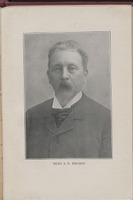 DEAN A. H. EDGREN
 -
 99th regiment of the New York Volunteers, serving in various capacities and sharing many engagements with the Army of the Potomac. His previous military training—he had graduated from the Swedish Royal Military Academy at Stockholm in 1860—came in good stead and gained him appropriate recognition. At the expiration of his leave of absence in October, 1863, Lieutenant Edgren returned to his native land to follow,—as he then supposed and planned,—his army career there. Nevertheless, some aspects of such a career must have irked the young lieutenant, for a few years later he again obtained leave of absence; this time to pursue his studies in France and Germany (1867-68). As a matter of fact, this absence from the army proved to be the preliminary step to his changing his entire life-work. In 1870 Edgren returned to America to enter Cornell University, which had then been lately organized. At that date, however, he had not yet discovered his very special talent and predilection for linguistic and literary studies. At Cornell he pursued chiefly the study of physical sciences. Not until he came under the instruction and guidance of Professor Whitney of Yale (1872) was young Edgren to enter upon preparation for his real career. At that time Professor Whitney was easily the foremost linguistic scholar in America. His courses Comparative Philology, Indo-European, Sanskrit, Gothic, etc., appealed strongly to young Edgren though, confessedly, his previous lack of training along linguistic lines made great demands both upon his iron will and his rugged physical constitution. A well-earned Ph. D. degree in '74 rewarded long years of intensive application. Soon Edgren proved by his independent researches in his chosen field how well he had laid the foundations. Now began a singularly active and long career of linguistic and literary labors—translations from his favorite authors—Longfellow and Tennyson,—from Kalisada, and other Indian classic writers, into his native Swedish or into English. His researches into Sanskrit verbal-roots involved
 -
 ollowing book-titles: Institutes of Constitutional History, English and American, 1884; Institutes of General History, 1885, 1895; Institutes of Economics, 1889, 1900; History, Prophecy, and Gospel, 1891; Droysen's Outlines of the Principles of History (translated), 1893; Wealth and Moral Law, 1894; An Honest Dollar, 1894; History of the Last Quarter-Century in the United States, 1896, 1903; Problems of Cosmology (adapted), 1903; The Call of the Land, 1913. E. L. HINMAN. AUGUST HJALMAR EDGREN PROFESSOR OF MODERN LANGUAGES 1885-91; ROMANCE LANGUAGES 1893-1900. During the half century of her existence the University of Nebraska has had a goodly share of eminent teachers and scholars in her service. From the first, good, able men were attracted by the opportunities the new state university offered. And still more was this the case when the pioneer days were passed, say in the '80's. It was in '85 that Professor Edgren came to us from the University of Lund, Sweden, to fill the chair of modern languages. Dr. Edgren was a man of large caliber, both mentally and physically. A markedly strong yet fine-featured, intellectual face, expressive of the scholar's keen interest in the field of inquiry and research; keen, kindly eyes set under an ample, broad brow; broad-shouldered, erect, soldierly, dignified, commanding attention and respect,—thus Dr. Edgren rises before those who knew him. Dr. Edgren had lived in America before he came to Nebraska. Upon the outbreak of the Civil War he, a lover of freedom and of freedom's cause, had asked for and obtained leave of absence from his regiment in Sweden, and had offered his services to the Union. He enlisted in the
 -
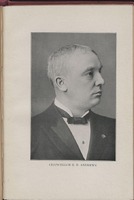
 At Nebraska also Chancellor Andrews' headship was a period of marked growth. The student total advanced from 2,256 to 3,611. On the faculty, with some sort of professorial rank, were 56 persons in 1900, and 390 eight years later. The total appropriations for his last biennium ($1,330,067) were nearly three times that of his first ($475,000). Even so, the supply of funds did not keep pace with his sense of the University's needs; and when the regents once added a thousand dollars to his salary, he begged that, "so long as the University is compelled to the rigid economy it now exercises," he "continue to be paid at the present rate." Among the main decisions of Chancellor Andrews' administration were, the establishment of the Medical College, under Dean Ward; of the Teachers' College, under Dean Fordyce; the construction of the physics building, museum, administration building, the Temple, and many others; and the bringing into our faculty of such men as Professors E. A. Ross, G. E. Howard, M. M. Fogg, Roscoe Pound, H. H. Waite, H. K. Wolfe, A. S. Johnson, Hutton Webster, and H. B. Alexander. The splendid personality of Dr. Andrews made itself widely felt through constant lecturing and public activity, as well as through steady literary production. For several years he maintained also a course in practical ethics to which the students came in throngs. Here he displayed that remarkable skill in exposition and virility in discussion, that wonderful blending of high ideals, horse sense, humor, and racy anecdote, which had earlier established his eminence as a teacher. Compelled by ill health to lay down the chancellorship, December 31, 1908, Dr. Andrews, accompanied by Mrs. Andrews, spent some years abroad. They even went around the world in 1909-10. Later they retired to Interlachen, Florida, where his death occurred October 30, 1917. He is buried on the campus of Denison University. A selection from the writings of Dr. Andrews, omitting many sermons and articles and minor works, yields the
 -
 641, and other increases were proportionate. But no quantitative measurement expresses the quickening of life and enthusiasm which animated the entire body, under the inspiration of a born leader of young men. The Brown constituency was at all times intensely loyal to E. Benjamin Andrews,—"Bennie," as they affectionately called him. Dr. Andrews had long been a believer in bimetallism. In 1897 a committee of the trustees requested of him, "not a renunciation of these views, as honestly entertained by him, but a forbearance, out of regard to the interests of the University, to promulgate them." While he had in fact always used due discretion, he took the ground that he could not meet the understood wishes of the Corporation "without surrendering that reasonable liberty of utterance . . . in the absence of which the most ample endowment for an educational institution would have but little worth." He immediately resigned. But the Corporation had not purposed this result. At a subsequent meeting the trustees adopted an explanatory letter, declaring that "It was not in our minds to prescribe the path in which you should tread, or to administer to you any official rebuke, or to restrain your freedom of opinion or 'reasonable liberty of utterance;'" and expressing the hope that he would withdraw his resignation. President Andrews did so, and remained at Brown until, in 1898, he resigned to accept the superintendency of the Chicago public schools. He made this transfer, however, mainly to facilitate Brown's, quest of much-needed endowments. Summoned to the chancellorship of the University of Nebraska on April 11, 1900, Dr. Andrews entered upon the functions of that office August 1. His great hearted spirit quickly dissipated any forebodings that partisan politics might conceivably at this juncture affect university management. It was recognized at once that the new leadership was clear in purpose, resolute in decision, academic in its standards, and influential in its popular appeal—a strong administration.
 -
 *
* -
 CHANCELLOR E. B. ANDREWS