
Nu History
Item set
- Title
- Nu History
Items
-
 The Cornhuskers finally reached the end of their long journey to Oregon, to be met by a joyous crowd of over 1,000 students and fans. The delay of the team getting home was a result of demands by the alumni to stay a while and enjoy the victory. Tradition was building already.
 -
 The Nebraska football team arrived back in Lincoln to be greeted by a large crowd of over 1,000 students. The head coach and captain of the football team described the victory and explained how much "Husker Spirit" helped them on their long journey.
 -
 The Nebraska football team, basking in it's glory after beating the Oregon Aggies 17-7 on a long road trip, decided to take an extra day of celebration. This threw some plans for a welcome ceremony out of whack, but during such an unprecedented victory, some spontaneity was to be expected.
 -
-
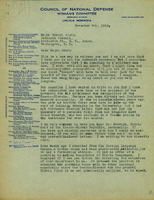 Two page letter between Šárka Hrbková and Chancellor/Major Samuel Avery during World War I. Avery was in Washington D.C. and Hrbková was sending him a communication to the new president of Czechoslovakia.
 -
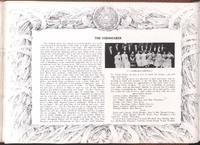 A page written by Van Dusen to give credit to (and make fun of) the Cornhusker staff. There is a photo that was taken at the Cornhusker staff formal.
 -
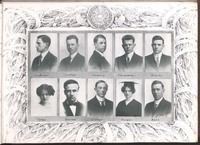 Photos of members of the 1912 Cornhusker staff. Top left to bottom right: Dana Van Dusen, Harry Coffee, Ralph Sweeley, Mark Hargrave, Rex Davies, Katherine Yates, Ernest Graves, Samuel Cotner, Ruth Munger, Sam Buck.
 -
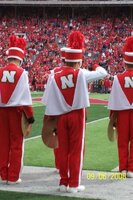 Bobby Fischer and Jessica Dussault, cymbals, prepare to take the field for a 2008 pregame solo.
 -
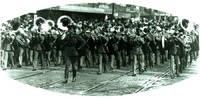 Picture of Carrol Panley (drum major) leading the R.O.T.C. Band down "O" street in Lincoln, Nebraska during the 1929 Armistice Parade.
 -
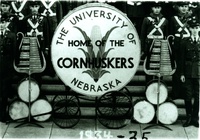 A close-up of a photo taken of the band in 1934 featuring the newest addition to the band, "Big Bertha."
 -
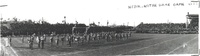 The University Band plays at the 1922 Notre Dame football halftime, the last game in the old stadium.
 -
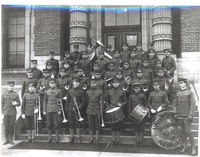 Group photo of the University Regimental Band
 -
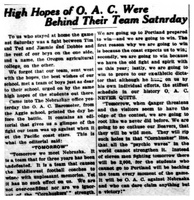 The Oregon Agricultural College was behind their team 100%. The newspaper strengthening that feeling with this article. The hard fought Nebraska victory over the Aggies shows just how gigantic of a win it was. Nebraska defeated a team which in the entire coast expected them to lose to. The victory propelled Nebraska to a higher standard across the nation.
 -
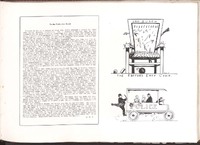 A letter in the yearbook to the publications board by van Dusen. Transcription: To the Publication Board Censure is the usual potion of those who loudly demand a reward for their own labors, however meritorious. Yet it sometimes happens that he who struggles for the good of others, demanding that they receive that which is due them, is greeted with garlands of roses. We are challenging Fate, we are going to take up the cause of others, tho our own be remotely intertwined, and whether our potion be censure or roses we shall not complain. Ever since the first CORNHUSKER was published there has been one man selected by the students to collect material and publish an annual book to serve as a souvenir to the student and an advertisement to the University. It is not a publication due to the wish of the editors, but rather it is due to the demand of the University. The men who have filled this position, whatever be their motive in seeking it, have found that it absorbed practically their entire time, sapped their energy, and confined their activity. They have all left their position with considerable dissatisfaction and some bitterness, disgusted with the theorizing of professors who have decreed that the office should offer no compensation but the absurd and empty vanity of a title and the imaginary solace of illusory honor.The hallucination that fancied honor can heal the wounds of battle has long been relegated to the nursery, and has only been resurrected by the distinguished dreamers on the Publication Board. We are men of honor, and we desire the respect of our fellow men; but we can not convince ourselves that absorption of time, demoralized scholarship, and shattered health are compensated for by any honor, however great. There must be, we believe, some other reward if Faculty and students hope to persuade the men who are capable along these lines to undertake the task. It is well known that Nebraska students are not the sons of wealthy families, and that consequently many of them are anxious to work their way thru college. These men can not afford to give their time to a school activity which offers them no return, when they may go downtown and obtain a good salary for the same expenditure of time and energy. The position of business manager of the CORNHUSKER offers a reward that satisfies the nees of such studentsl but the editorship remains a barren field. Why this distinction is made is more than one of practical mind can conceive. Both of these positions are clearly of a business nature, neither is literary, neither is compensated for by privileges. There is as much honor attached to the managership as to the editorship, and yet the former is rewarded with shiny dollars. What grounds appear upon which to base this favoritism? What argument will justify this unjust discrimination? What can there be to prevent the editor from forming the utmost contempt for a congrolling body which makes no effort to render justsice and rightly administer the insterests under their direction? Do credit hours reward the editor? Partly perhaps, but only in small measure. Try rewarding the manger with credit hours and see how quickyly you will have to beg some one to tak ethe job. And yet equally they involve matters of business. The Publication Board says to the editor: We know that the book will take thirty hours a week, but six hours credit ought to satisfy you. We know it is an awful task, but you ought to be glad to get the job because the students will think you're smart. Now, Mr. Infuriated Reader, let us tell you why we say this here. We believe that the editor of the CORNHUSKER ought to be paid a definite salary. We believe that he ought to be able to reward those who give their time to his aid with credit hours, and, believing this, we have finally despaired of ever moving the body which controls these matters to any actions. We realize that we will be condemned for doing this, but we do it for the sake of the principle, and are willing to suffer the consequences. Will some one see in this tirade an earnest desire to do a good thing, and will that person aid in securing the relief asked for? If so we are content. Henceforth and forever, we bury the hatchet. D. B. V
 -
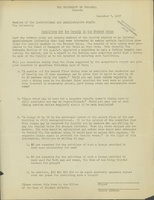 This is a questionnaire given out to the instructional staff and faculty of the University of Nebraska, detailing some questions about what a faculty member might desire inside of the Student Union. If so, it asks if they would be willing to subject themselves to a fee.
 -
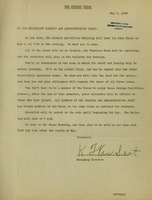 This is an internal memo sent out to the instructional staff and faculty of the University inviting them to the Open House of the Student Union happening on May 4, 1938.
 -
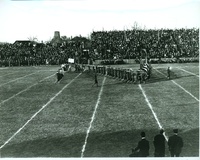 Picture of the Cadet band at 1911 football halftime in "N" formation
 -
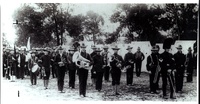 Picture of the Cadet band at summer camp in the early 1900s
 -
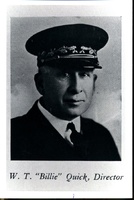 Picture of William T. "Billy" Quick, Director from 1917-1937
 -
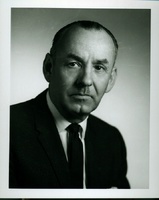 Picture of Donald Lentz, Band Director from 1937-1973
 -
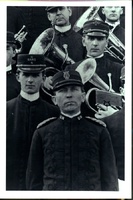 Picture of Band Director August Hagenow, Director 1903
 -
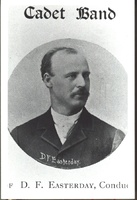 Picture of Band Director D.F. Easterday, Director 1883-1898
 -
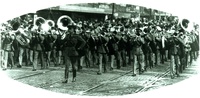 Picture of Carrol Panley (drum major) leading the R.O.T.C. Band down "O" street in Lincoln, Nebraska during the 1929 Armistice Parade.
 -
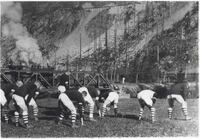 The Husker football team practice by train tracks on the way to Portland, Oregon.
 -
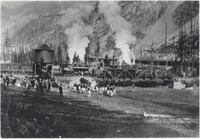 The Husker football team practices by train tracks on the way to Portland, Oregon.