-
Title
-
Field Notes, 1912, Part 1_021
-
Alternative Title
-
Field Notes, 1912, Part 1
-
Date
-
1912
-
Creator
-
Raymond J. Pool
-
Description
-
Raymond J. Pool Field Notes
-
Identifier
-
120712
-
Transcription
-
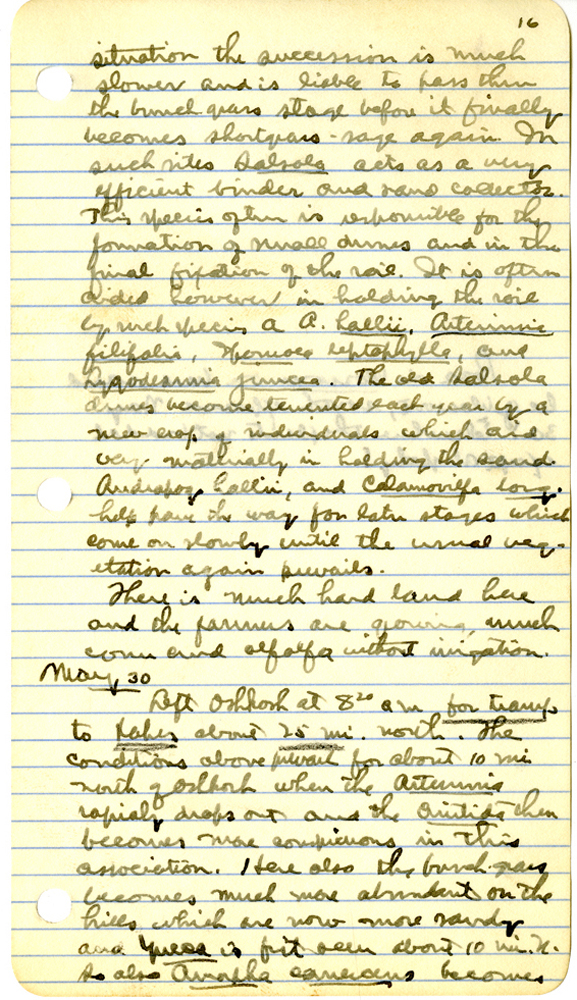
21 16 situation the succession is much slower and is liable to pass them the bunch grass stage before it finally becomes shortgrass - sage again. In such sites Salsola acts as a very efficient binder and sand collector. This species often is responsible for the formation of swale dunes and in the final fixation of the soil. It is often aided however in holding the soil by such species as A. Hallii , Artemisia filifolia , Ipomoea leptophylla , and Lygodesmia juncea . The old Salsola become tenanted each year by a new crop of individuals which aid very very materially in holding the sand. Andropogon Hallii , and Calamovilfa long. help pave the way for later stages which come on slowly until the usual vegetation again prevails. There is much hard land here and the farmers are growing much corn and alfalfa without irrigation. May 30 Left Oshkosh at 8:20 am for train to Lakes about 25 mi. north. The conditions above prevail for about 10 mi. north of Oshkosh when the Artemisia rapidly drops out and the Aristida then becomes, more conspicuous in this association. Here also the bunch grass becomes much more abundant on the hills which are now more sandy and Yucca is first seen about 10 mi. N. So also Amorpha canescens becomes
-
Rights
-
To inquire about usage, please contact Archives & Special Collections, University of Nebraska-Lincoln Libraries. These images are for educational use only. Not all images are available for publication.
-
Is Version Of
-
E:\great nebraska\downloads\downloads\scraped_images\raymond_j_pool_notes_1912_part_1\raymond_j_pool_notes_1912_part_1_120712-1912-021.jpg