-
identifier/filename
-
371-00064
-
title
-
Letter, Myron H. Swenk article, 1919
-
description
-
Typewritten enclosed article, 11 pages, titled "The Economic Value of the Ring-Necked Pheasant."
-
transcription
-
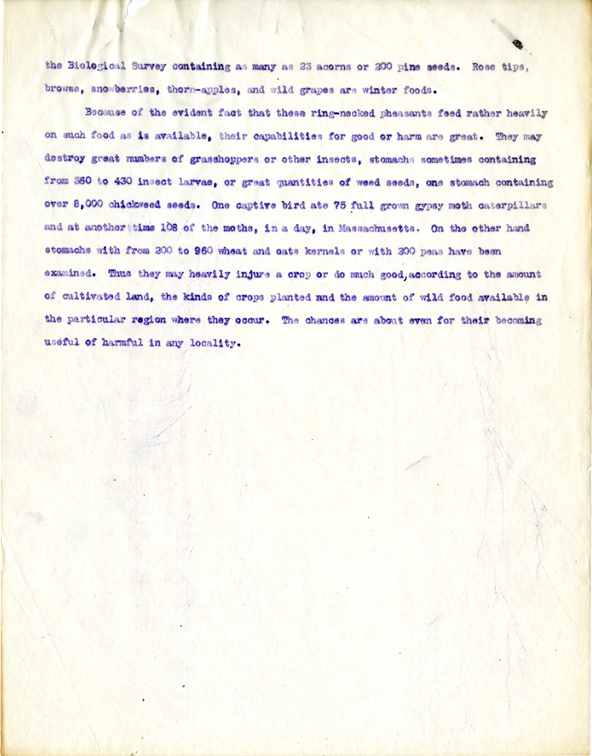
the Biological Survey containing as many as 23 acorns or 200 pine seeds. Rose tips, browse, nowberries, thorn-apples, and wild grapes are winter foods. Because of the evident fact that these ring-necked pheasants feed rather heavily on such food as is available, their capabilities for good or harm are great. They may destroy great numbers of grasshoppers or other insects, stomachs sometimes containing from 360 to 430 insect larvae, or great quantities of weed seeds, one stomach containing over 8,000 chickweed seeds. One captive bird ate 75 full grown gypsy moth caterpillars and at another time 108 of the moths, in a day, in Massachusetts. On the other hand stomachs with from 200 to 960 wheat and oats kernels or with 200 peas have been examined. Thus they may heavily injure a crop or do much good, according to the amount of cultivated land, the kinds of crops planted and the amount of wild food available in the particular region where they occur. The chances are about even for their becoming useful of harmful in any locality.
-
date
-
1919
-
source/RG#/MS#
-
MS 0371
-
isPartOf/Collection
-
Nebraska Ornithologists' Union (NOU), Records
-
rights
-
For copyright information, please contact the repository.
-
publisher
-
Archives & Special Collections, University of Nebraska-Lincoln Libraries
-
language
-
English

 371-00064.jpg