-
identifier/filename
-
371-00063
-
title
-
Article, Myron H. Swenk, 1919
-
description
-
Typewritten enclosed article, 11 pages, titled "The Economic Value of the Ring-Necked Pheasant."
-
transcription
-
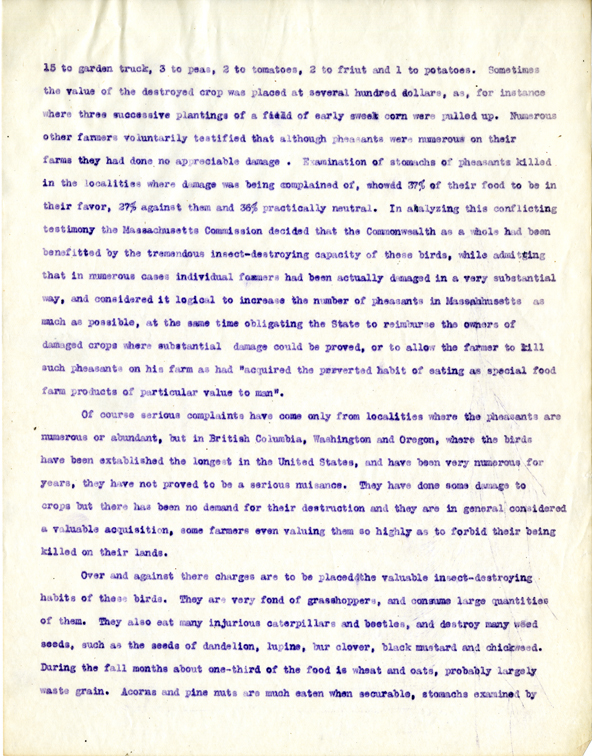
15 to garden truck, 3 to peas, 2 to tomatoes, 2 to fruit and 1 to potatoes. Sometimes the value of the destroyed crop was placed at several hundred dollars, as, for instance, where three successive plantings of a field of early sweet corn were pulled up. Numerous other farmers voluntarily testified that although pheasants were numerous on their farms they had done no appreciable damage. Examination of stomachs of pheasants killed in the localities where damage was being complained of, showed 37% of their food to be in their favor, 37% against them and 36% practically neutral. In analyzing this conflicting testimony the Massachusetts Commission decided that the Commonwealth as a whole had been benefitted by the tremendous insect-destroying capacity of these birds, while admitting that in numerous cases individual farmers had been actually damaged in a very substantial way, and considered it logical to increase the number of pheasants in Massachusetts as much as possible, at the same time obligating the State to reimburse the owners of damaged crops where substantial damage could be proved, or to allow the farmer to kill such pheasants on his farm as had "acquired the perverted habit of eating as special food farm products of particular value to man". Of course serious complaints have come only from localities where the pheasants are numerous or abundant, but in British Columbia, Washington and Oregon, where the birds have been established the longest in the United States, and have been very numerous for years, they have not proved to be a serious nuisance. They have done some damage to crops but there has been no demand for their destruction and they are in general considered a valuable acquisition, some farmers even valuing them so highly as to forbid their being killed on their lands. Over and against there charges are to be placed the valuable insect-destroying habits of these birds. They are very fond of grasshoppers, and consume large quantities of them. They also eat many injurious caterpillars and beetles, and destroy many weed seeds, such as the seeds of dandelion, lupine, bar clover, black mustard and chickweed. During the fall months about one-third of the food is wheat and oats, probably largely waste grain. Acorns and pine nuts are much eaten when securable, stomachs examined by
-
date
-
1919
-
source/RG#/MS#
-
MS 0371
-
isPartOf/Collection
-
Nebraska Ornithologists' Union (NOU), Records
-
rights
-
For copyright information, please contact the repository.
-
publisher
-
Archives & Special Collections, University of Nebraska-Lincoln Libraries
-
language
-
English

 371-00063.jpg