-
identifier/filename
-
371-00012
-
title
-
Letter, Field notes, Myron Swenk, 1911, June-Sept.
-
description
-
Typescript field notes, page 12, Myron Swenk bird observations on trip to Halsey and Thomas Counties in Nebraska, along entries from Lincoln, Nebraska
-
transcription
-
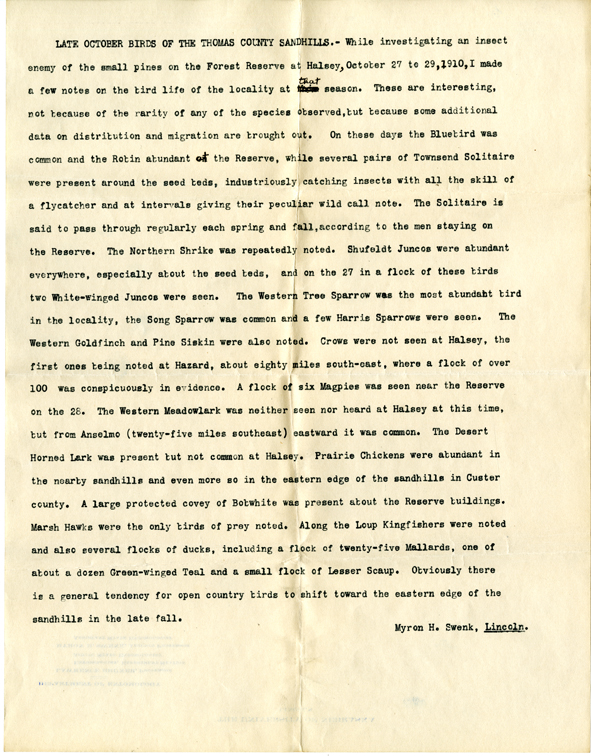
LATE OCTOBER BIRDS OF THE THOMAS COUNTY SANDHILLS. - While investigating an insect enemy of the small pines on the Forest Reserve at Halsey, October 27 to 29, 1910, I made a few notes on the bird life of the locality at that season. These are interesting, not because of the rarity of any of the species observed, but because some additional data on distribution and migration are brought out. On these days the Bluebird was common and the Robin abundant at the Reserve, while several pairs of Townsend Solitaire were present around the seed beds, industriously catching insects with all the skill of a flycatcher and at intervals giving their peculiar wild call note. The Solitaire is said to pass through regularly each spring and fall, according to the men staying on the Reserve. The Northern Shrike was repeatedly noted. Shufoldt Juncos were abundant everywhere, especially about the seed beds, and on the 27 in a flock of these birds two White-winged Juncos were seen. The Western Tree Sparrow was the most abundant bird in the locality, the Song Sparrow was common and a few Harris Sparrows were seen. The Western Goldfinch and Pine Siskin were also noted. Crows were not seen at Halsey, the first ones being noted at Hazard, about eighty miles south-east, where a flock of over 100 was conspicuously in evidence. A flock of six Magpies was seen near the Reserve on the 28. The Western Meadowlark was neither seen nor heard at Halsey at this time, but from Anselmo (twenty-five miles southeast) eastward it was common. The Desert Horned Lark was present but not common at Halsey. Prairie Chickens were abundant in the nearby sandhills and even more so in the eastern edge of the sandhills in Custer county. A large protected covey of Bobwhite was present about the Reserve buildings. Marsh Hawks were the only birds of prey noted. Along the Loup Kingfishers were noted and also several flocks of ducks, including a flock of twenty-five Mallards, one of about a dozen Green-winged Teal and a small flock of Lesser Scaup. Obviously there is a general tendency for open country birds to shift toward the eastern edge of the sandhills in the late fall. Myron H. Swenk, Lincoln
-
date
-
undated
-
source/RG#/MS#
-
MS 0371
-
isPartOf/Collection
-
Nebraska Ornithologists' Union (NOU), Records
-
creator/photographer
-
Swenk, Myron Harmon, 1883-1941
-
rights
-
For copyright information, please contact the repository.
-
publisher
-
Archives & Special Collections, University of Nebraska-Lincoln Libraries
-
language
-
English
-
extracted text
-
LATE OCTOBER BIRDS OF TH THOUAS COLWTY SANDHTLIS.- Wile investigating an insect
foneny of the snail pines on the Forest Reserve ut Halsey, ctoter 27 te 29,2910) mado
4 few notes on the bird Life of the Locality at Mil sonscrs The
not tecauee of the rarity of any of the species Skserved,tut Eecause sone additional
asta on dietritution and sign
on aro brought cute On these days the Bluetird was
camen ard the Rotin atundant of the Reserve, while several pairs of Tomnsend Selitaire
present around the seed tede, indueteiously catching insects with all the skill of
a fycateher and at intervals giving their peculiar wild cal note, ‘The Solitaire se
said to pase through reyularly each opring and fall,according to the nen staying on
the Reserves The Northern Shrike was repoate
yy noteds Shufoldt Juncos were abundant
everywhere, especially about the soed tede, and on the 27 ina flock of these birds
tro Wiitecwinged Jumces were evens Tho Wostors Treo Sparroy was the most stundabt tird
in the Locality, the Song Sparror wae comen tnd a for Harrie Sparrove were soon. Tho
Western Golafinch and Pine Siskin were also noted. Crove were not soen at Halsey, the
firet ones teing noted at Hazard, stout eighty piles seuth-oast, there a fleck of over
100 was conspicuously in evidences A flock of six Magpies was seen near the Reserve
on the 26 The
torn Meadowlark wae noither soon nor heard at Halsey at this tine,
ut from Aneolmo (twenty-five miles southeast) eastward it was commons Tho Desort
Horned Lark was pr
nt ut not ccamon at Halsey. Prairie Chickens were abundant in
the nourty sandhills and even nore
in the astern
ge of the sandhilie in Custer
‘county. A large protected covey of Botuhite wis present stout the Reserve Luildings.
Marsh Hawie were the only tirds of prey noted. Along the Loup Kingfishers were neted
land alee eoveral flecke of ducks, including a flock of twenty-five Mallerds, one of
tout © dozen Greon-winged Teal and © mall flock of Lesser Scaup. Otvieuely there
Se a penerel tondency for open country Eirds to shift toward the eastern odge of tho
sandhills in the late fel.
Myron He Svenk, Lincotne
�