
Nu History
Item set
- Title
- Nu History
Items
-
-

-
-
-

-
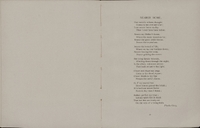 But half the earth may intervene Thy place of rest and mine between— And leagues of land and wastes of waves May stretch and toss between our graves Thy bed with summer light be warm, While snow-drifts heap, in wind and storm My pillow, whose one thorn will be Beloved. that I am not with thee? But if there be a blissful sphere Where homesick souls, divided here, And wandering wide in useless quest Shall find their longed-for heaven of rest. If in that higher, happier birth, We meet the joy we missed on earth, All will be well. for I shall be At last, dear loving heart with thee! Elizabeth Akers. IN MY DREAMS. Come to me in my dreams, and then By day I shall be well again; For then the night will more than pay The hopeless longing of the day. Come as thou cam'st a thousand times, A messenger from radiant climes. And smile on thy new world and be As kind to others as to me! Or, as thou never cam'st in sooth, Come now, and let me dream it truth; And part my hair and kiss my brow, And say: My love! why sufferest thou?" Come to me in my dreams, and then By day I shal1 be well again! For then the night will more than pay The hopeless longing of the day. Matthew Arnold The lines which close this sketch were found among her writings, so we suppose it was her favorite hymn, as they were particularly applicable to her latter years.
 -
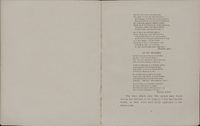 But half the earth may intervene Thy place of rest and mine between— And leagues of land and wastes of waves May stretch and toss between our graves Thy bed with summer light be warm, While snow-drifts heap, in wind and storm My pillow, whose one thorn will be Beloved. that I am not with thee? But if there be a blissful sphere Where homesick souls, divided here, And wandering wide in useless quest Shall find their longed-for heaven of rest. If in that higher, happier birth, We meet the joy we missed on earth, All will be well. for I shall be At last, dear loving heart with thee! Elizabeth Akers. IN MY DREAMS. Come to me in my dreams, and then By day I shall be well again; For then the night will more than pay The hopeless longing of the day. Come as thou cam'st a thousand times, A messenger from radiant climes. And smile on thy new world and be As kind to others as to me! Or, as thou never cam'st in sooth, Come now, and let me dream it truth; And part my hair and kiss my brow, And say: My love! why sufferest thou?" Come to me in my dreams, and then By day I shal1 be well again! For then the night will more than pay The hopeless longing of the day. Matthew Arnold The lines which close this sketch were found among her writings, so we suppose it was her favorite hymn, as they were particularly applicable to her latter years.
 -
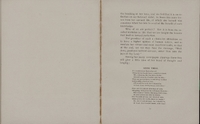 the breaking of her laws, and we feel that it is no reflection on our beloved sister, to learn this same lesson from her earnest life, of which she herself was conscious when too late to avail of the benefit of such knowledge. Who of us are perfect? Yet it is from the so called mistakes in life that we are taught the lessons that lead on toward perfection. The grandeur of such a character stimulates us to have a higher opinion of human nature, and to emulate her virtues and most excellent traits, so that at the end, we too may hear the message, "Well done, good and faithful servant; enter thou into the joys of thy Lord." Among her many newspaper clippings these two will give a little idea of her trend of thought and longing: WITH THEE. If I could know that after all These heavy bonds have ceased to thrall. We, whom in life the fates divide, Should sweetly slumber side by side— That one green spray would drop its dew Softly alike above us two. All would be well, for I should be At last, dear, loving heart, with thee! How sweet to know this dust of ours. Mingling, will grow the self-same flowers— The scent of leaves, the song-bird's tone, At once across our rest be blown. One breadth of sun, one sheet of rain Make green the earth above us twain! Ah, sweet and strange, for I should be, At least, dear tender heart, with thee!
 -
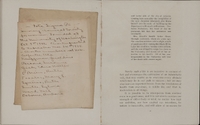 and social side of the city of Lincoln. Coming here soon after the completion of the new chemical laboratory, she threw herself into the work of building up the department with much enthusiasm. Professor Nicholson, the head of the department, felt that her assistance was invaluable. Mrs. Lloyd's health broke down, through overwork, about six years ago. She was first stricken with a slight attack of paralysis while visiting the Black Hills. Later her condition became more serious, and she was obliged to resign her chair in the University and devote all of her attention to her health. All of her contemporaries in the University will hear of her death with sincere regret. Surely such a life is an incentive to earnest effort and encourages the cultivation of an indomitable will, that may enable us to overcome every obstacle which may lie in our path to success; but we may also learn an important lesson from the breakdown of health from overstrain, in middle life. and that is, moderation in all things. It is possible to be intemperate from overzeal even in a good cause, and it is not wise to overtax our strength of either body or mind, no matter how high our ambition, nor how exalted our intentions, for nature is inexorable, and will allow of no excuse for
 -
-
-
-
-
-
-
-
-
-
-
 She spared not herself. She was not only a trained chemist, she was a great teacher, and more than that she was the beloved adviser and counsellor of students. You young women have lost a great deal because you came to the university after Dr. Lloyd had gone from us. There still lingers on this campus like a sweet perfume the memory of her devoted life. It is your good fortune to be here where these memories still influence your lives[.] You do not realize it perhaps, but many of you are still influenced by the life of this strong, helpful woman. It is your misfortune that you have not come into direct personal contact with this refined, devoted, wise and willing friend, adviser, and teacher — Rachel Lloyd." Also a brief notice of her death in one of the Lincoln newspapers of same date. News has been received in Lincoln of the death of Mrs. Rachel Lloyd, for seven years professor of analytical chemistry in the University of Nebraska. Mrs. Lloyd died on Wednesday last at the home of Mrs. Scattergood, at Beverly, N J., where she had resided for some time. Her friends in Lincoln know that she had been quite ill all winter, but no additional facts beyond the announcement of her death have been received. Mrs. Lloyd made a strong impression upon the life of the University during her residence here[.] She was considered a remarkable woman. She was gifted in many ways, and her influence was not confined to her class room. It was felt in the general social life of the University, in the organization for the encouragement of the arts, and also in the benevolent
 -
 week ago today. She was for seven years professor of analytical chemistry in this university, having been electcd to the position in May, 1887, and resigned in June, 1894, because she was entirely broken down in health." Chancellor Canfield in speaking of her resignation said: "This is another case of an instructor whose health was practically broken in the service of the state." Mrs. Lloyd was a woman of rare refinement, coming from an old family in which wealth and refinement had been present for generations. At about thirty-five years of age she felt the need of turning to some employment to earn her livelihood[.] She became a teacher in a school for girls in Philadelphia. Here she labored for many years, teaching during the year and spending her vacations in Harvard University in the chemical laboratory. I hcard her say that she was drawn to chemistry because her husband was a chemist and bccause he was interested in that kind of work[.] She continued to study at Harvard, taking the work one summer at a time, and at last she was able to go abroad. She studied for two years at the University of Zurich, and in thc spring of 1887 this old university gave her the degree of Doctor of Philosophy for the work she had done. Immediately after receiving the degree she came to us. I shall never forget the occasion when Professor Nicholson called me into his office in the chemical laboratory in the spring of 1887. The regents had made provision for an additional professor of chemistry and he wished to confer with me in regard to the matter. Said he, "I am thinking of nominating a woman for the place." He said it timidly, and I shrugged my shoulders, because there are not many women chemists, and there were fewer then than now. Then he told me all about her, and read letters from eminent men in Harvard and elsewhere showing that she was a woman not only of high attainments in chemistry, but a woman of rare attainments otherwise. She came to us and remained with us, working as probably no other professor has worked here; she worked herself to death in our service.
 -
 Prof. Rachel L1oyd, in addition to her degree and scholarly attainments, was a member of the American Association for the Advancement of Science, to which she was elected August, 1882. Also a member of the Deutsche Chemische Gesellschaft of Frankfort, Germany, elected November, 1884. On Saturday, March 10, 1900, funeral services were held in St. Peter's P. E. Church, Third and Pine Streets, Philadelphia, over the remains of Prof. Lloyd and they were laid with those of her husband at South Laurel Hill. A copy of a short address by Acting Chancellor Bessey, of the University of Nebraska, on the receipt of the news of the death of Prof. Rachel Lloyd, is here inserted. IN MEMORY OF MRS. LLOYD. HER INFLUENCE ON STUDENT LIFE AT THE UNIVERSITY Acting Chancellor Bessey spoke to the students in the chapel yesterday morning of Mrs[.] Rachel Lloyd, formerly instructor in the University, who died last week at Beverly, N.J. He said: "It has been my sad duty a number of times to speak of the departure of those who have been in the University. I want to say a little with regard to one who was a professor in this University for seven yeras, and who retired six years ago; one who left a very strong impression here, one whose impress is still felt. Dr. Rachel Lloyd died in Beverly, N.J., just one
 -
 A newspaper clipping shows her ability in cookery. SCIENTIFIC COOKERY. Miss Bouton Lectures on Domestic Science at the University. Yesterday at 3 p. m. Miss Rosa Bouton at the chemical lecture room delivered a lecture upon domestic science before the Alumnae Association of the State University. A number of friends outside of the Association had been invited, so that an audience of sixty or more ladies greeted the speaker. The trend of the lecture was toward establishing, in the near future, a chair of Domestic science in the University. Miss Bouton claimed this to be a scientific age and that to no point could applied chemistry be better directed than to the kitchcn. The chemistry of food ought to be thoroughly understood by every one, but especially by women, the arbitresses of our fate. A young woman making domestic science a study is upon her graduation ready to do or direct in the home. She is really "fore-warned, fore-armed." At the close of the lecture, Dr. Rachel Lloyd's sophomore class of young women served a dainty lunch, prepared by the Doctor's own hands upon purely scientific principles. All were most agreeably entertained and departing wished that they might always "be upon the list" when the Association has a lecturer.
 -
 work. She kept an active membership in the various sceintificscientific societies, notably The German Chemical Society, The English Chemical Society, The American Chemical Society and the American Association for the Advancement of Science in which she was a fellow. She also was a charter member and an active worker in the Chemical Club of the University of Nebraska; also a member of the Photographic Society of Lincoln. In addition to her more formal lectures she often met her students and gave them an informal talk or popular lecture in order to be sure that the subject matter was perfectly clear to them. Besides this work she gave occasional popular lectures by request before different State societies. She also took an active interest in the development of the sugar beet industry in this State and did an immense amount of valuable work in the furtherance of this business. Notwithstanding this constant activity in her own especial line of work she found time to interest herself in various other things. Mrs Lloyd was distinctively artistic in her tastes. She helped organize and was a charter member of the Hayden Art Club and gave much time to its interests in the way of addresses and lectures on art topics. She also had strong literary tastes and was a prominent member of the Browning and Shakepeare Clubs in which she was an active member contributing much to their success in the way of talks, short papers and discussions. Socially she was a universal favorite and in demand at all University functions. In these various lines of activity she never lost sight of the welfare of her students and managed to give one or two receptions during each year especially designed to advance their interests. To those students and others who were fortunate enough to come into personal relations with her her memory will always be cherished as one who sacrificed herself for the welfare of others.
 -
 and her choice of words was excellent. She occasionally gave public papers or addresses on subjects not chemical. I recall one of given papers before a Browning Club and another before the Hayden Art Club[.] In regard to her own life and affairs, Mrs. Lloyd was very reticent. Few of her friends here knew as much of her life history as Acting Chancellor Bessey gave in his chapel talk a short time since[.] During thc summer of '92 she went as the guest of Mr. and Mrs. Weeks to the Black Hills. While there she was stricken with paralysis from which I think she never recovered fully. She had an unusually strong will and was determined not to give up. During the two years which followed she bravely fought the physical weakness, but finally she was obliged to succumb. Shc spent the first year after leaving Nebraska in Hillside, Wisconsin, where she taught science in a small private school. Since then she has spent most of her time with friends in Massachusetts, New York, and near Philadelphia. She died at the home of her friend Mrs. Scattergood in Beverly, New Jersey, her old paralytic trouble having returned with renewed energy. Dr. Lloyd was a woman of unusual ability. By means of thorough scientific training and hard work she attained for herself a place in the scientific world above that ordinarily reached by woman. She was one of the first American women to take a Ph. D. in a foreign university. Prof. Mabery, of Harvard, pronounced her the best woman chemist in this country at the time of her appointment in this university. Her name, by the way, appears with Prof. Mabery's on the result of the "Study of Certain Acrylic Acids." She was a member of the German Chem. Gesellschaft as well as of the American Chemical Society. Above and beyond her intellectual attainments she had a kind hand, a loving nature and a large heart. To me the memory of Dr. Lloyd's life is full of valuable lessons. I am thankful that it was my privilege to know her intimately. Mrs. Lloyd was devoted to her professional and scientific