
Nu History
Item set
- Title
- Nu History
Items
-
 In 1975 the churches in Scotsbluff [sic], Nebraska, organized a 14 mile walk for CROP, the community hunger appeal of Church World Service. It seemed fitting and proper that the shoes that had served so well all over the world, should be called into service for this worthy project. On Sept. 21, I took them down from the shelf and put them on, but it didn't feel right. Twenty years had passed since the day I purchased the shoes in 1955, I was 20 years older and the shoes were 20 years older, and although we had 12 years of close companionship, we did not grow old together. We were no longer compatible. I wore them for the first mile but they were not the same, so I changed to another pair for the remaining 13 miles. I brought the shoes with me to California, but what do I do with a pair of shoes I can no longer wear, and that are so badly cracked that they are of no value to anyone? I put them on the shelf for several years and then with a short farewell, sent them to their final resting place, the Sonoma City dump.
 -
 IESC NEWS
 -
 SHOES If your shoes could talk, what story would they tell? I once heard an ambassador's wife say, after two hours at a stand up cocktail party, "I have my sit down shoes and my stand up dress." How many times have you wanted to kick off your shoes and go bare foot? I have no idea how many pairs of shoes I have had in my life. My brothers always complained that as I out grew my shoes, they always had to wear them; the result was they never had new shoes. This could be true because, I can only imagine what a task it was for my parents to keep three growing boys in shoes. I had my Sunday shoes that I wore once a week, went to church, and occasionally when I went to some other dress-up affair. The shoes that I wore every day to school, and to work on the farm, were the ones that really took the beating. I never liked to wear boots for riding, but regular work shoes, with strings and hooks, would get caught in the stirrup or ropes and were not safe when handling horses or cattle. Low-top shoes were always getting dirt in them, so for many years I wore a shoe that was a cross between a riding boot and a low top shoe. It was easy to get in and out of the saddle, and tight enough around the ankle to keep the dirt out. I had a pair of shoes that I wore thru heat and cold for over 12 years. They were 10½ D. walking boots that laced to the top and came just above my ankles. I bought them from Sears in July of 1955. They were in the air freight that accompanied us to Turkey, and I wore them ever step I took in the field in Turkey, Jordan, Nepal, India, Colombia SA. and Japan. They were not water proof, they have been soaked with water, and have been covered with mud from four continents. They have walked along the Jordan river from the sea of Galilee to the Dead Sea. As the years and kilometers passed, the shoes changed in appearance. The soft brown leather became stiff and cracked. The soles wore out and three times were replaced, first with leather,the [sic] next two times, with a special material that was used in the Middle East to repair automobile tires. Each time a bit of length and width were sacrificed to hold the new soles. By 1967 it was obvious that I would have to say goodbye to the beloved shoes, but when we came home I just put them on the shelf, and had no reason to wear them.
 -
 Man Prepares for Walk In Well-Traveled Shoes By DIANE EICHER For the Star-Herald SCOTTSBLUFF — Shoes that have walked on four continents will get some additional mileage Sunday when Jim Metzger joins the CROP Walk for Hunger. But Metzger isn't sure the shoes will be able to finish the 14-mile course — the soles are a bit tattered. "Ill [sic] walk as far as the shoes will let me," he said. Nearly 20 years old, the tan-colored boots have been resoled three times, and Metzger said if he'd realized earlier that this walk was approaching. he would have had them resoled once again. Before his retirement Metzger was an irrigation advisor with the Agency for International Development to the Turkish and Jordanian governments, and was involved in special assignments which took him to Nepal, India and Japan. The shoes covered a lot of terrain in these countries during 1955- 1967, he said. "THERE WERE a good many times I walked from the Sea of Galilee to the Dead Sea in these shoes," he said. Last year Metzger went to Colombia, South America to redesign irrigation systems on two plantations there, as a volunteer with the International Executive Service Corps. Once again, the shoes accompanied him. Sunday the shoes will lead him in a walk for an organization Metzger feels is worthwhile — CROP, the community hunger appeal of Church World Service. He helped lay out some irrigation systems provided by CROP monies, and became acquainted with many of the persons involved in CROP, he said. THE CROP walk at Scottsbluff begins at the First United Presbyterian Church and follows a route that will lead walkers out of the city on Highway 29, over Mitchell Pass, past the Scotts Bluff national monument, through Gering and Terrytown and back to the starting point. Metzger said he thinks walking on concrete surfaces such as those he'llencounter Sunday is more difficult (at least on the shoes) than some of the areas he covered while in the foreign service. Metzger says he never planned to give his shoes such a colorful history — "It just happened." "They're comfortable and I did a lot of walking in them," he commented, and now the shoes have a special significance. And when this Sunday's walk is over, said Metzger as he showed the worn shoe- bottoms, he plans to have the boots resoled, possibly in preparation for some more walking adventures.
 -
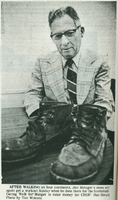 AFTER WALKING on four continents, Jim Metzger's shoes will again get a workout Sunday when he dons them for the Scottsbluff- Gering Walk for Hunger to raise money for CROP. Star-Herald Photo by Tim Winters.
 -
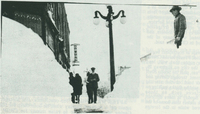
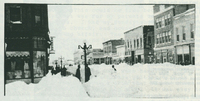
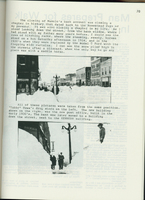 The closing of Mumsie's bank account was closing a chapter in history that dated back to the homestead days of my parents. It was also closing a chapter in my life. As I stood looking down the street, from the bank window, where had stood with my father many years before, I could see the rows of hitching racks, where the steaming, sweaty, horses stood on a hot Saturday afternoon in 1914, and in the 1920's when they were replaced by the model T Ford with its flapping side curtains. I can see the snow piled high in the streets after a blizzard, when the only way to go any place was with a saddle horse. All of these pictures were taken from the same position. "Tubby" Howe's drug store on the left. The new building shown on the right, was the new post office, built in the early 1930's, The [sic] bank was later moved to a building down the street, next to the KENNEDY building, [sic]
 -
 *
* -
 *
* -
 University of Nebraska were working there, and I was able to participate in some of their functions. I renewed my license with Lincoln National Life Insurance Company, passed my Securities examinations and worked part time. Verna became active again in the PEO Chapter where she had been president in 1945, and again in 1970. I served on the Board of Trustees of West Nebraska General Hospital from 1969-1976. We were active in the Methodist Church, we belonged to a bridge club, with friends of ours in 1940-45. We joined a discussion group that tackled many subjects on religion, politics, and government, on which we had a variety of opinions. Mumsie had cataracts removed and lived with us for several months. She returned to her home in Crawford, but in 1970 had a stroke and moved into a retirement home in Scottsbluff. She died in May of 1973, and her home was purchased by one of her neighbors. We closed her bank account that was opened in 1907.
 -
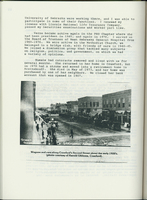
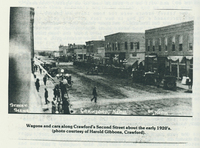 Wagons and cars along Crawford's Second Street about the early 1920's. (photo courtesy of Harold Gibbons, Crawford).
 -
 JORDAN TO NEBRASKA January, 1967, ended our third term assignment in Jordan, but we did not leave until April 21st. My final report on the East Ghor Canal project was due in February but I had developed a blood clot in my leg and was hospitalized for several weeks. My next assignment was to be with Soil Conservation Service at Salinas, California. State assignments were made after overseas personnel had served out of the States for at least 10 years. The assignment was approved by both the Agency for International Development and the Soil Conservation Service. I received my authorization on April 14th, and expected to report for duty in Salinas in early June. Before we left Washington I was handed a change of orders. I was assigned to the Jordan Desk in Washington, D.C.. The reason given! (I never did find out who did it), "This old man is 60, and will be of little use to us again, overseas". Our travel orders were for home leave to Denver, Colo. We had purchased a VW Bug in New York and were going to drive thru to California. Neither Verna nor I wanted to live in Washington, D.C. and after much discussion, we decided that now was the time to retire, so I took the remainder of annual leave I had accumulated and sent Washington a notice of intent to retire as of Sept. 30, 1967. Where to retire became a topic of much discussion, we had enjoyed our 10 years in Longmont. Dale and Peggy were both living in California, and we liked the area around Sonoma, but there were other things to consider. Dad died in 1960 and Mumsie was living in her home in Crawford, and was in failing health. Ernie was still in the Navy, and Lawrence was very busy with his veterinary practice in Boulder CO., I was free to help, so the final decision was to retire in Scottsbluff. We made numerous trips from Crawford to Scottsbluff. By September we bought a house and enough furniture to move into our own home. Because of the Arab-Israeli war in June 1967, our furniture didn't arrive until April of 1968. We were back in familiar territory in Scottsbluff, we had lived in Gering from 1940 to 1945. Verna's brother Weston, owned MIDWEST FARM SERVICE, the company I had started in 1942, so we saw them often. It was an interesting experience for me to be back in Nebraska, and have an opportunity to be close to The West Nebraska Experiment Station. Several of my classmates from the
 -
 and is designed for short runways. They call it the (STOL), Short Take Off and Landing. The mission had helicopters that were used for some flights, but only for special jobs, and rescue work. I only hoped that if we were stranded we could be rescued, because it would take us 7 days to walk out, we had taken less than an hour to fly in. As the days became weeks, the trips to the far ends of Nepal became easier on me, but I never did feel comfortable with the method of transportation. Every takeoff and landing gave me the feeling of WHAT IF. What if we didn't hit the landing strip? Would they get the livestock off in time? What if we couldn't get back in the air again? When we got ready to leave, the pilot would taxi to the end of the landing strip, set his brakes, speed the engine until the plane shook as if it had a chill. He would suddenly release the brakes, give the engine full throttle and we would shoot out like a cannon ball. Some times we were on top of a mountain, and as we came to the end of the runway, with a thousand foot drop, the plane would drop a few hundred feet, and then suddenly begin to climb, and we would soar upward like a bird. The areas we studied were as different as the people. The natives were Tibetans in the north, where it was cold and windy much of the time, and all were wearing heavy clothing. The land was hilly and bare, much of the wood had been cut for fuel and the hills were badly eroded. In the South, the Teri, the weather was hot and humid, the land was flat, and most of the people were from India. The area was mosquito-ridden, and after 10 or 15 years of spraying, a strain of mosquitoes had developed that was resistant to any insecticides. One of the most memorable trips, was from Katmandu to the Teri, in the south. Verna went with me, and we rode in a Jeep, over a road that had been built from New Delhi to Katmandu, only a few years earlier. There were many sharp turns down the mountain, the curves resembled tear drops, you could not see the turn under the one you were on. We were 8 hours going, and it was a 45 minute flight home in the STOL. I left Nepal with a feeling of sadness. How could this country ever support the people? The trees and other vegetation were gone, erosion had eaten away all the top soil and washed it into rivers that were now flooding Bangladesh, and northern India. With the continual increase in population, the people are doomed to a life of misery. There can never be anything but starvation, until the hills have some type of erosion control.
 -
 NEPAL In April 1966, Verna and I were making plans to take a trip to Turkey. We had been living in Amman, Jordan for six years, and anticipated that our tour might soon end. We wanted to get back to Izmir and see some of our Turkish friends before leaving the Middle East. The Agri. Division of USAID received a request from Nepal to make a study of their irrigation projects. I was the only Irrigation Specialist on the team and was asked to make the study. I felt honored to be selected, but I knew from previous experience, that this type of assignment is a lot of hard work. The country asking for the help, arranges the schedule to make the best use of the specialist's time. The days are usually long and hard, filled with field trips and conferences. Verna and I were disappointed that we had to cancel our vacation, but I really wanted to take the assignment, and I wanted Verna to go with me. She had gone with me on previous assignments, but it could be a lonesome trip if she had to spend days alone, while I was in the field. She wasn't so certain that she wanted to make the trip, but we had friends working in Nepal that we had known in Jordan, and I convinced her that she would have enough company to keep her busy. On April 14, 1966, we left Amman by air. The first stop was Beirut, but we had to stay there for 2 days, because the British Air Line flight to New Delhi was delayed in London by a blizzard. When we did get to New Delhi, it was too late for our flight to Katmandu, so we were delayed another day. When we did arrive, it was as I had expected, the schedules were well made, and I was taken to the field the next morning. The mode of transportation to each project was very different from that I normally used. "That is Mt. Everest, so we are in the right place, I have lost radio contact with Katmandu, but every thing looks good, we will set down here." These words from the pilot were not much comfort to me, I couldn't see anything that looked like an airport, but he lowered the landing gear, and circled a grass air strip several times, while a half dozen small boys ran the cows and goats from the grassy strip. The pilot set the plane down, facing into the wind, reversed the propeller and gunned his motor. Our safety belts bit into our shoulders, and we come to a quick stop within a few hundred yards from where the landing gear first touched down. We are flying in a Swedish plane, with a 300 horse power motor. It carries the pilot and three passengers,
 -
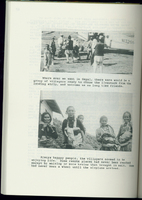 Where ever we went in Nepal, there were would be a group of villagers ready to chase the livestock from the landing strip, and welcome us as long time friends. Always happpy [sic] people, the villagers seemed to be enjoying life. Some remote places had never been reached escept [sic] by walking or mule trains that brought in salt. Sore had never seen a wheel until the airplane arrived.
 -
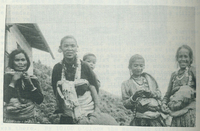 Always happpy [sic] people, the villagers seemed to be enjoying life. Some remote places had never been reached escept [sic] by walking or mule trains that brought in salt. Sore had never seen a wheel until the airplane arrived.
 -
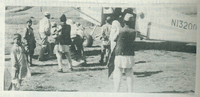 Where ever we went in Nepal, there were would be a group of villagers ready to chase the livestock from the landing strip, and welcome us as long time friends.
 -
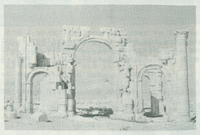
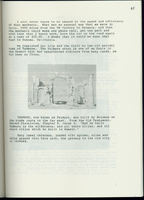 I will never cease to be amazed at the speed and efficiency of that mechanic. What was so unusual was that we were in Syria, 3000 [sic] miles from the VW factory in Germany, and that the mechanic could make one phone call, get the part and with less than 2 hours work, have the car on the road again at a cost of $25.00. I doubt that it could be done that fast in Sonoma, California. We completed our trip and the visit to the old ancient town of Tadmore. The Palmyra story is one of an Oasis in the desert that had entertained visitors from many lands, a far away as China. TADMORE, now known as Palmyra, was built by Solomon on the trade route to the far east. From the Old Testament: Second Chronicles, Chapter 8, verse 4. "And he built Tadmore in the wilderness, and all store cities, and all store cities which he built in Hamath." Many camel caravans, loaded with spices, silks and china passed thru this arch, the gateway to the old city of TADMORE.
 -
 *
* -
 On each side of the road were soldiers, nervously fingering their rifles. The policeman slid out of the car when he let go of the car door, and motioned us to drive up a little further, where we were stopped by three young soldiers with rifles. They seemed good natured and smiled at us once in a while, but this did not help much, we wanted to get our of there. They motioned us to stay where we were. After an hour or more, one of the young men came over to the car and said, in good English, "The party is over you may go now." With smiles and waving their hands, we made our way back to the village. As we approached the bus with broken windows, and dented sides, we saw a little old man cleaning up the glass and debris. Not another person was in sight. We could not read the papers or understand the radio, so we never knew what happened in that little village. It was a great relief to be on the road again, but our troubles were not over. By 3:30 that afternoon we were able to leave the old road and get back on the highway. The heavy rains, however, had damaged the good roads as well and we were driving in water up to the axle. A sudden jolt and a noise that sounded like a gun brought us to a sudden stop. The car seemed to be sitting down in the street. I got out to take a look and could see that the right rear wheel was dragging on the fender, we had broken a torsion bar, we could still move if we went very slowly. We were getting close to Homs, so we decided to continue I the best we could and hope to get help. We found a garage, the owner spoke some English, and with what Arabic I knew we were able to communicate. The mechanic looked at the J problem, and agreed with me as to what the trouble was. A new part was required. The mechanic took out his watch and let me know that he might still get a call to Aleppo in time for them to send a new part to him by morning. He took the torsion bar out, got the serial number and put in a telephone call. They had the part, and it would be in on the truck the next morning. The following morning, while Verna and the girls did some sightseeing around Homs, I went to the garage and waited. By eight o'clock the truck arrived, and sure enough the part was there. By 10:00 o'clock the mechanic crawled out from under the car, and with a greasy grin, held up his hand with the universal sign, thumb touching two fingers, and said in English. "It be O. K.", and it was. I have talked with other V.W. mechanics and all have said that it was an unusual break.
 -
 TADMORE "You may go now, the party is over." These few words in English by a Syrian soldier were music to our ears. For an hour, four Americans had been sitting in a little Volkswagon Bug, waiting for some one to give the signal that all was clear. On Nov. 11, 1961, Verna and I, accompanied by the Embassy nurse, LuAnn Ziebarth and Beverly Persse, the secretary from the Embassy, left Amman, Jordan for a trip t the old Syrian city of Palmyra, known in Bible times as Tadmore. Tadmore was once a prosperous city on the trade route from Persia to Damascus, when camels were used to cross the desert. The heavy rains had washed out some of the main traveled highway and we were required to take the old road to Homs. The old road took us thru the village of El Mnin, a village of clean white-washed buildings with blue painted frames around all the windows and doors. It was obvious when we entered the village that some- thing was very wrong, people from every part of the village were running toward a large bus sitting in the middle of the village. They all seemed to be carrying shovels or sticks, and some were picking up rocks and throwing them at a bus that was in the middle of the road. We were four scared Americans. We had been in a riot in Istanbul when we arrived in Turkey, and We knew that we had no business being where we were. This was a riot and we didn't know what we should do. The sticks and rocks were breaking all the windows in the bus, and we were within fifty feet of the bus, I tried to turn around, but there were so many people around us that this was impossible. We didn't have to wait long, a 200 Lb. well dressed policeman pulled the car door open next to Verna and tried to get in beside her. He didn't fit very well, but he hung onto the door and hollered "Yella" in Arabic, I knew that he meant get out of here, NOW. He was a scared policeman and his lack of composure didn't help my state of mind. With much hollering, he was able to get the people out of our way, and we drove past the bus, and a house where people were trying to get to, by crawling over the fence. When we got past the crowd, he motioned for us to drive up side road that was very steep and rocky.
 -
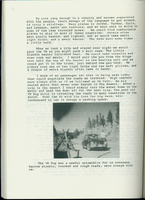 To live long enough in a country and become acquainted with the people, learn enough of the language to get around, is truly a privilege. Many places in Jordan, Turkey, Syria, and Lebanon, never see tourists, and we were able to drive to some of the less traveled areas. We could find comfortable places to stay in most of these countries. Hotels often were poorly heated, and lighted, but we would take extra light bulbs, and a small heater. The beds were some times a little hard. When we took a trip and stayed over night we would pack the VW as you might pack a suit case. The little Aladdin heater furnished heat. We could take utensils and even cook our meals. I would pull the pin from the hinge that held the top of the heater to the heating unit and we could put it in the trunk, just behind the gas tank. We always took one or two light bulbs and two soft pillows, and a couple of extra blanket often came in handy. I know of no passenger car that is being made today that could negotiate the roads we traveled. High centers were always with us if we followed an Ox Cart. An air cooled motor that never over heated in the desert. After a trip in the desert I could simply turn the water hose on the motor and wash the dust off for the next trip. The good old VW Bug still is traveling the roads in many countries in the world. Even the US with its love for big cars, will condescend to let it occupy a parking space. The VW Bug was a useful automobile for us overseas. Narrow streets, crooked and rough roads, were always with us.
 -
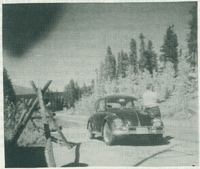 The VW Bug was a useful automobile for us overseas. Narrow streets, crooked and rough roads, were always with us.
 -
 THE VOLKSWAGON BUG The 12 years of my life, from the age of 5 until the age of 17, when I graduated from High School, was for me the age of the saddle horse. The little Volkswagon Bug was the equivalent of the saddle horse for Verna and me from 1955 to 1967, while we lived in Turkey and Jordan. We owned one for 18 years after we returned from over seas. Verna and her red VW Bug were inseparable. I wanted to trade it in on a new car, but nothing doing, I had to trade the one I was driving. She was willing to ride in the new car, but to sell her Red VW Bug was out. It took an old man with a big Buick, who ran a stop sigh, to put it out of business. The front of the Bug looked like an accordion after he hit it. The VW was made in Germany before World War II. It was called the peoples wagon, "Folksvagon". After the war, the stock could have been bought for almost nothing. Some U.S. soldiers bought stock to help the factory get started and made millions on their investment. I have seen the VW Bug in at least a dozen countries. In August of 1962, Verna and I purchased a green VW Bug at the factory in Wolfsburg Germany. We ordered it when we were in Jordan, and on our return trip to Jordan we picked it up at the factory, in Wolfsburg, and drove thru Germany, Italy, Yugoslavia, Bulgaria, Turkey, Syria and Lebanon. We have owned 6 VW Bugs. When we came to the US on home leave we would pick up the Bug in New Jersey, and drive to Colorado and Nebraska to see family and friends, and then sell it when we returned to duty. The VW Bug could go any place any other passenger car could go, and many places where they couldn't. We drove through the narrow winding streets of the old City of Jerusalem, we could enter the St. Stephens gate which was normally used for donkeys and horses. We climbed the hill to the castle at Karak [sic] Jordan, we crossed the desert to Palmyra in Syria. We navigated the streets of Damascus, Paris and Beirut, and many other cities and villages in the Middle East. We rented one in Marseille, France and drove thru France to Paris. One of the most scenic routes we have ever driven, was along the Mediterranean coast in southern Turkey. A friend of mine once said of this road, [sic]"It is so crooked and has so many sharp turns that you can see your own headlights in your rear view mirror." The sight of the blue sea and small wooded islands is a sight I shall always remember
 -
 This means that any decrease in elevation number would be a higher point than a lower number. A reading of -200 meters was below a reading of -199. All readings in the Jordan valley were below sea level. In order for me to make the necessary calculations, I had to use my hand books. I had to convert the metric bench mark readings to feet and inches. Instead of -200 meters I would have -659' 5". A -199 meters would be - 656' 2". This was before the days of hand calculators, I used a slide rule and pencil and paper. If I wanted to irrigate a 10-acre field and apply 1 acre-foot of water. I apply 1233.62 Cubic meters of water to 4.047 hectars [sic]. The metric system uses the decimal point and is easy to calculate. One hundred centimeters is a meter. One hundred meters, a kilometer. For us it takes 12 inches to make a foot, 36 inches to make yard, 5280 feet in a mile or 146.66 yards. Fortunately I did not make any serious mistakes in design. I tried to run water up hill once or twice, because I forgot to put the minus sign before my figures, The Jordanian engineers would often have a good laugh. My Jordanian counterparts, all of them young enough to be my sons, had PhD's from American Universities and knew the metric system. The only help I could give them came from my practical experience of 30 years. These boys were all Palestinian, and my experience with them was very rewarding for me, they were well educated, and capable people. I have never forgiven the U.S. government for its position on the Arab-Israel issue, local politics have made our foreign policy decisions, and some of the blood spilled in the Middle East is on our hands
 -
 EAST GHOR CANAL One of the most difficult tasks I have ever been assigned, was to design an irrigation project in the metric system. Any irrigation engineer, trained in America, is handicapped when working in other countries. I don't know why we in America have been so slow in adopting the metric system, not only is it simpler than the British System, it creates problems in world trade. Most countries use the metric system [sic] The countries that I have worked in, used the metric system. Turkey, Jordan, Nepal, Colombia. To design an irrigation project requires extensive surveys, this involves calculations that require measurements in distance, elevation, volume, rates of flow, pressure and temperature. The Jordan Government, with the assistance of the U.S. Marshal Plan, later USAID (U S Agency for International Development) built an irrigation system in the Jordan Valley, between the Dead Sea and the Sea of Galilee. This was all east of the Jordan river and was known as the EAST GHOR CANAL. From 1960 to 1967, I was assigned as irrigation Advisor to the Jordanian Government on this project. Most of the people of Jordan are Muslims. At the death of the land owner, the property is divided equally between the heirs, and this division was made with the idea that the heirs would receive land of equal value, which often meant that the good land was the low land at the bottom of eroded hills, the poor land at the top. I have seen farms 200 feet wide. and a quarter of a mile long running up and down hill. A parcel of land of this shape did not make an easy field to irrigate. The Jordan Government bought all the land in the Jordan Valley and when the project was completed, it was redistributed into units that could be irrigated. To best illustrate my confusion in surveying for these projects, I will describe the process I had to follow just to survey a simple irrigation ditch. My irrigation hand books were those I had used in the United States, and the design must be made in the metric system. Not only did we have to design in the metric system: we were below sea level and all bench marks would have minus signs. We were below sea-level and we were using sea elevations as we do in the U.S.